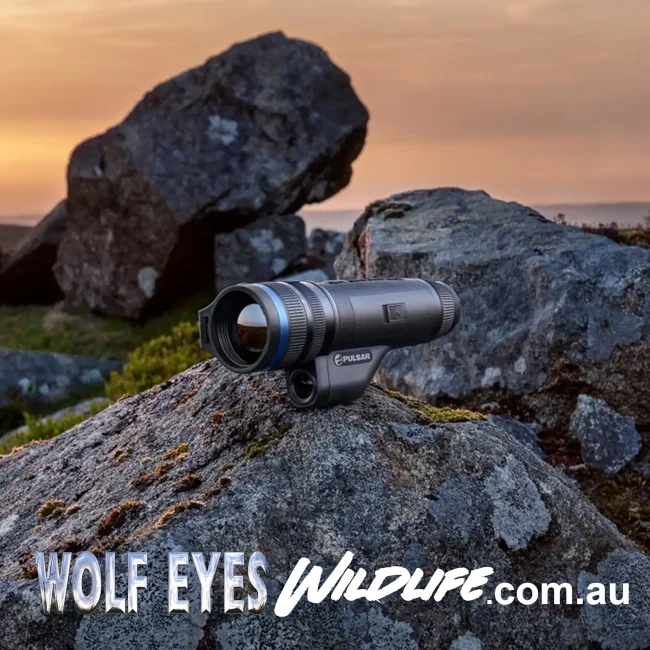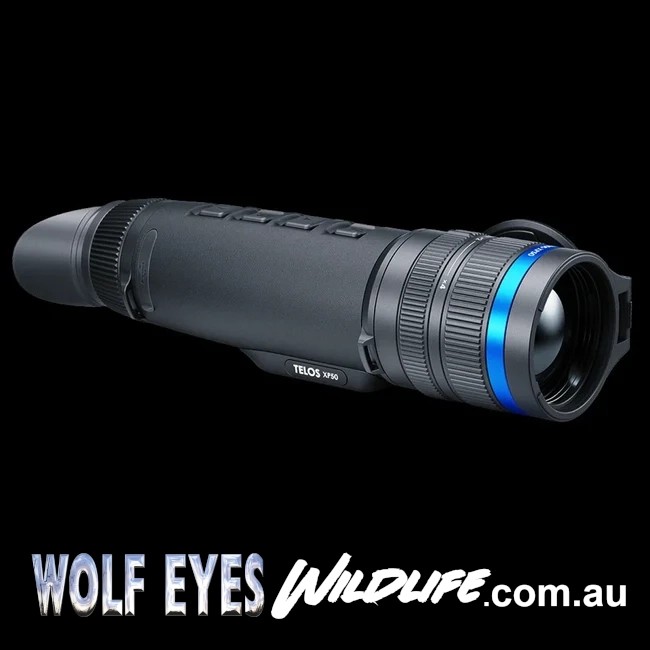

The Pulsar Telos XP50 Thermal Monocular is designed for users looking for detailed thermal imaging in challenging conditions. At the core of this sophisticated device is a highly sensitive 640×480 uncooled thermal sensor with a NETD of less than 18 mK, paired with a fast F1.0 50 mm germanium lens. This combination provides impressive image detail and thermal sensitivity, even when temperature differences are subtle. Its detection range is rated at up to 1,800 metres, while the 2.5–10x magnification range provides flexibility for both wider-area scanning and closer observation.
When it comes to viewing, the Pulsar Telos XP50 Thermal Monocular features a 1024×768 AMOLED display and a 50 Hz frame rate for smooth transition. Users can choose from eight colour palettes to suit different conditions and preferences. Built-in 64 GB storage allows photographs and video to be recorded, while integrated Wi-Fi enables connection to smartphones and tablets through the Stream Vision 2 app.
Another particularly valuable feature is the Pulsar Telos XP50 Thermal Monocular’s upgradeable design. It is one of many devices developed by Pulsar in such a way that selected hardware components, including the sensor and objective lens, can potentially be upgraded as technology develops, helping extend the useful life of the device.
The Pulsar Telos XP50 Thermal Monocular can have applications well beyond simply spotting animals at night. It can be useful for pest and feral animal management, property and land management, security, search activities, outdoor recreation and nocturnal animal research. For farmers and land managers, thermal imaging can help locate heat sources or animals that might be difficult to see with conventional optics. Wildlife enthusiasts and researchers can observe nocturnal activity without relying on visible light.
With an IPX7 waterproof rating, operation from -25°C to +40°C and approximately 8.5 hours of battery life, the Pulsar Telos XP50 Thermal Monocular outperforms competitors when it comes to serious outdoor use.